
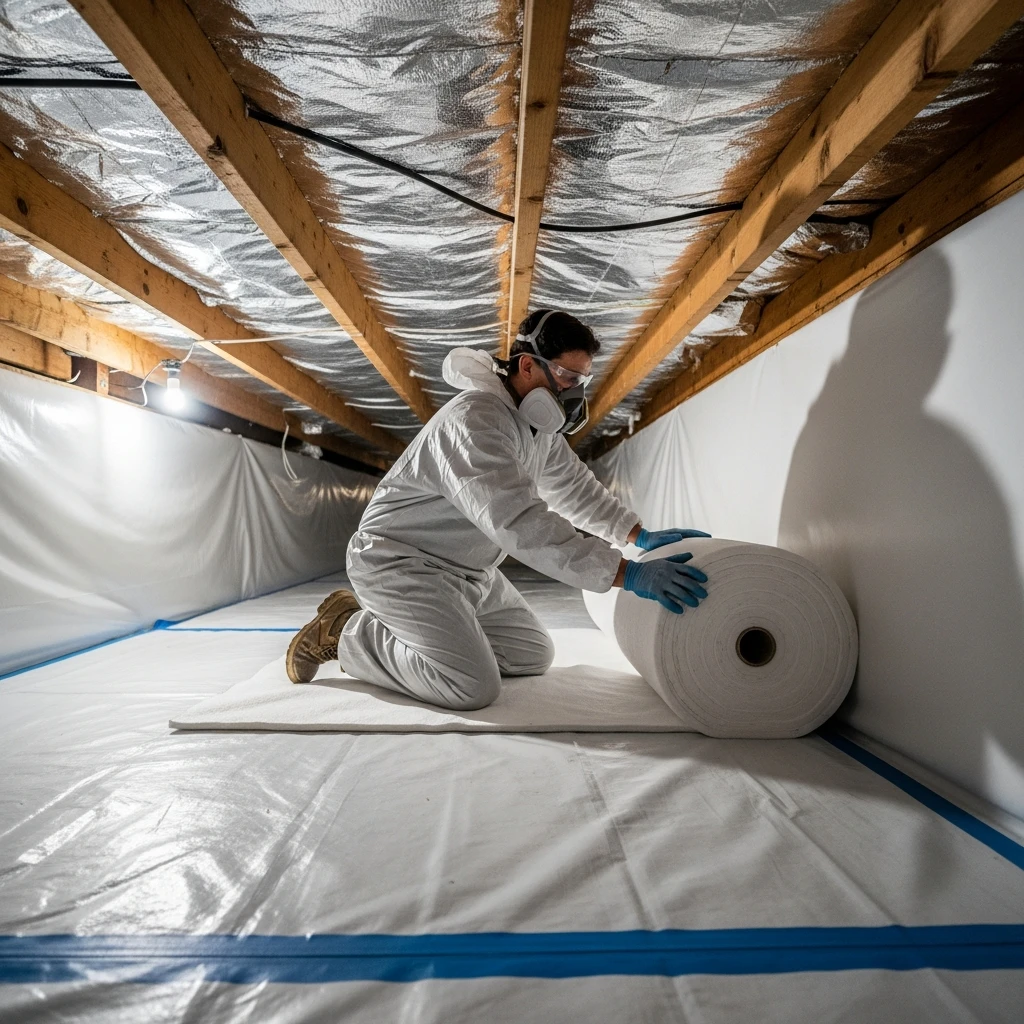
High quality home upgrades often depend on the small details that stay hidden from view once the job is finished. It is easy to assume that buying the best materials is enough to guarantee a successful result for your house. Without a precise approach to the work, even the most expensive barrier will fail to protect the structure from dampness.
Gaps and loose seams allow humidity to creep back in, undoing all the effort and money spent. Hiring experienced crawl space encapsulation contractors ensures that every corner and penetration is sealed correctly the first time. Professionals know how to navigate tight spaces and manage complex transitions where most amateur installations often tend to fall short.
This level of precision is vital for long term success. When installation details are handled correctly, the crawl space becomes a controlled environment rather than a constant source of moisture and uncertainty. That stability carries upward, supporting the health and durability of the entire home.
Common Installation Mistakes
Gaps in the vapor barrier are one of the most frequent errors that lead to a failed system. If the plastic is not run all the way to the edges, ground moisture will still find a path into the air.

Poor sealing along the foundation walls allows outside humidity to bypass the protection entirely. If the adhesive fails or the tape peels away, the environment becomes uncontrolled again. This leads to a return of the musty smells.
Incomplete coverage around piers and plumbing pipes creates small islands of exposed earth that release vapor. Every inch of the ground must be covered to create a truly effective shield against the dampness found in the soil. This thoroughness ensures the barrier acts as a single, impenetrable sheet.
Drainage and Moisture Planning
Fixing any active leaks before sealing the area is a non negotiable step for a successful project. If you trap water beneath the plastic, it will cause the soil to become a swampy mess that smells terrible.
Ground water management involves ensuring that any seepage has a clear path to a sump pump or a drain. Without a way for liquid to escape, the pressure will eventually pull the barrier away from the walls.
Holistic planning requires looking at the yard grading and the gutters before the interior work begins. A good strategy accounts for the external environment to reduce the amount of water the system has to handle daily. Addressing these sources first is the only way to build a foundation that lasts.
Material Durability and Placement
The quality of the tape and adhesive used to join the seams determines the lifespan of the entire system. Low grade materials will eventually dry out and lose their grip, causing the barrier to sag or pull.
Mechanical fasteners are necessary to keep the wall liners in place over many years of seasonal temperature changes. Relying only on glue is a mistake that leads to a messy and ineffective foundation space later.
Identifying wear points near the entry hatch or under heavy foot traffic areas ensures the plastic remains intact. Durable materials must be placed strategically to handle the physical stresses of occasional maintenance visits without tearing. High quality placement ensures the liner stays exactly where it was installed.
What Good Performance Looks Like Over Time
Humidity stability is the primary indicator that the encapsulation is working as intended throughout the year. The relative humidity should stay below fifty percent to prevent the growth of mold and the decay of wood.
Odor elimination happens almost immediately once the soil is covered and the air is dry. That familiar musty scent should be replaced by a clean and neutral environment that no longer drifts into the living rooms.
Energy efficiency improves as the heating and cooling system no longer has to fight the massive temperature swings from below. You will notice warmer floors in the winter and a home that stays cooler. These results prove that the investment was the right choice.
Why Installation Quality Determines Outcomes
Long term reliability is the ultimate goal of any major home repair or moisture management project. A high quality installation stands up to the most severe weather and provides constant protection for the structure.
Cost effectiveness is achieved when the work does not have to be repeated due to a failure. Doing the job right the first time saves thousands in potential mold remediation and structural wood repairs.
Final results are measured by the stability of the air and the integrity of the materials used. When every detail is handled with care, the home remains a healthy and efficient space for decades. Professional oversight ensures the foundation remains a dry and reliable base.