
Joinery is at the core of woodworking, involving the careful connection of timber to create structures that are both strong and visually refined. For tradespeople, technicians, and electrical contractors, precision is more than a mark of skill—it’s a necessity. Many joinery methods depend on exact measurements and clean cuts, which are only possible with well-calibrated, high-quality tools.
Below, we explore the joinery techniques where accuracy in tooling directly impacts the quality and durability of the final result.
Dovetail Joints
Dovetail joints are commonly used in drawers and fine cabinetry. This interlocking method relies on a few carpenter tools suited to joinery work, such as dovetail saws, marking gauges, and bevel-edge chisels, to create angled pins and tails that lock together seamlessly. Precision is crucial—any inconsistency can lead to gaps or loose joins.
Dovetail jigs paired with routers are often used to ensure uniformity across multiple joints. These joints are usually visible in finished work, so accuracy doesn’t just provide strength—it also enhances visual appeal. Clean edges and tight fits are a clear sign of professional craftsmanship.

Mortise and Tenon Joints
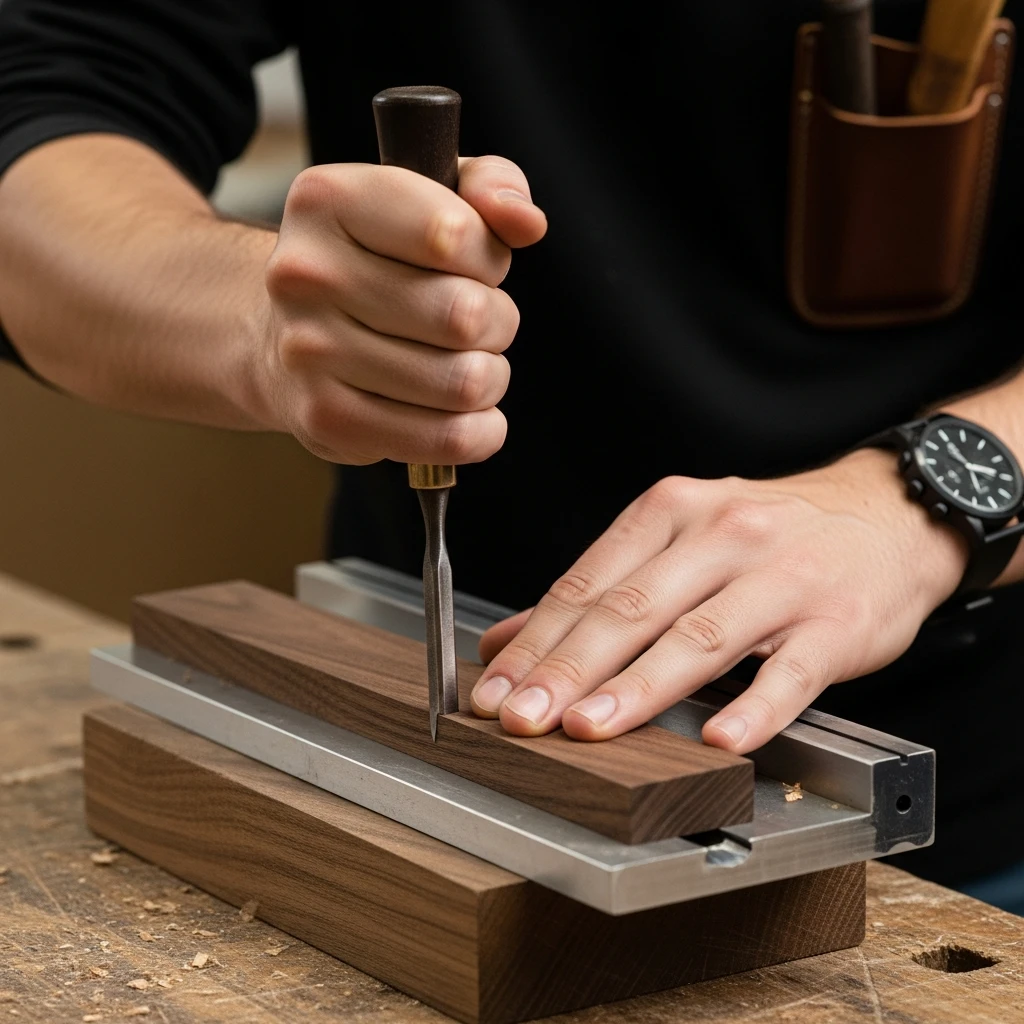
Mortise and tenon joints are used widely in structural framing, furniture, and door construction. The tenon must fit snugly into the mortise; too loose, and the joint is weak; too tight, and it won’t assemble properly. Reliable tools like mortise chisels, tenon saws, and marking gauges are essential to get it right.
The strength of this joint relies on crisp cuts and straight shoulders. When repeated across a frame or installation, consistency is key. Well-maintained, precise tools help achieve clean, load-bearing joints that stand the test of time.
Biscuit Joinery
Biscuit joinery is a fast, efficient method for aligning and securing boards, commonly used in cabinetmaking and panel assembly. It involves cutting matching slots in adjoining pieces and inserting a compressed wooden biscuit that expands with glue to lock them together.
Accuracy is critical. A biscuit joiner must cut each slot at the correct depth, angle, and position. Misaligned slots lead to uneven surfaces and weaker bonds. When done correctly, this method delivers quick, reliable alignment with minimal finishing required.
Finger (Box) Joints
Finger joints use a series of rectangular cuts to interlock two boards, often seen in boxes and drawers. Each finger must be identical in size and spacing to achieve a tight, flush fit.
Precision jigs used with router tables or dado blades allow tradespeople to repeat cuts with confidence. Well-cut finger joints provide excellent mechanical strength and a clean, geometric finish. Inaccuracies, however, are immediately noticeable and compromise both strength and appearance.
Housing (Dado) Joints
Housing joints, also called dado joints, involve cutting a channel into one piece of wood to house another. They’re ideal for shelving, partitions, and cabinetry, where stability and a clean finish matter.
The groove must match the thickness of the mating board exactly. Routers or table saws with dado blades are typically used, and adjustments must be made with care. Even small inaccuracies result in looseness or misalignment, especially in installations that demand repeatable accuracy.
Bridle Joints
Bridle joints are similar to mortise and tenon, with the tenon running the full width of the timber and fitting into an open slot. A common variation is the corner bridle joint, which joins two members at their ends to form a corner and is frequently used to house rails into uprights such as legs. This form offers strong compression resistance, good protection against racking, and is especially popular in workbench construction, where rigidity is critical.
Tools like tenon saws, router planes, and precision marking tools ensure accurate layout and alignment. If the fit is too tight or uneven, the joint becomes difficult to assemble and may fail under stress, making precision essential for both strength and efficiency.
Lap Joints
Lap joints involve overlapping sections of wood and are often used in framing or carcass construction. While simple in concept, their effectiveness depends on clean, even cuts that allow the pieces to sit flush.
Mitre saws, chisels, or routers are commonly used to create these joints. If the recess is too deep or shallow, the joint won’t sit correctly, leading to instability or gaps. Clean, repeatable cuts are what make this basic joint sound.
Precision as Standard in Modern Joinery
In modern trade work, precision is not optional; it’s expected. Whether constructing a fitted wardrobe, assembling a structural frame, or building cabinetry on-site, tradespeople rely on accurate tools to meet tolerances and deliver consistent results.
High-quality joinery blends skill and equipment. With the right tools, tradespeople can work faster, reduce rework, and ensure each joint performs as it should—for strength, alignment, and a finish that speaks for itself.