
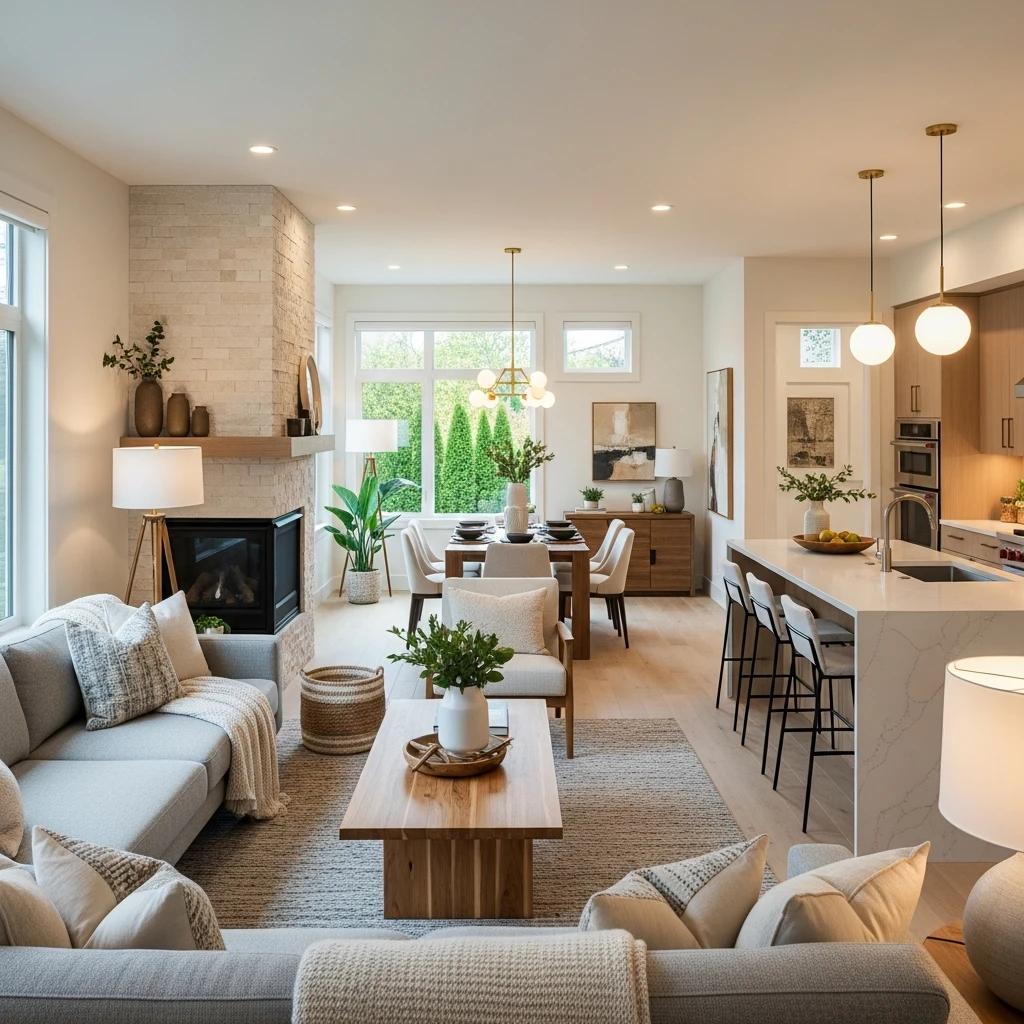
The year 2026 marks a significant shift in home design, moving away from stark minimalism toward a style that is deeply rooted in comfort, personal expression, and seamless functionality. Homeowners are prioritizing spaces that feel like a true sanctuary—warm, inviting, and highly adaptable to modern life. The key trends blend modern aesthetics with an organic, tactile sensibility, ensuring that every corner of the home is not only beautiful but also works harder for the people who live there.
The Rise of Warm Minimalism
Forget the cool grays and sterile whites of the past decade. 2026 is embracing a “warm minimalism” that uses texture, natural materials, and earthy color palettes to create a sense of grounded elegance. This style is about being uncluttered, but never cold.
It’s an intentional design choice where every object serves a purpose or evokes a feeling. Colors are drawn from nature—think rich terracotta, muted sage green, deep browns, and a new range of sandy, creamy neutrals. These palettes are layered to create depth and a cocooning effect.
Materials play a crucial role in bringing this warmth to life. Look for textured surfaces like plaster walls, fluted cabinetry, and abundant use of natural wood. The shift is towards materials that have an organic, tactile quality, inviting you to touch and interact with your environment.


Sculptural Shapes and Soft Silhouettes
A major trend is the introduction of soft, sculptural forms that counteract the hard lines of traditional modern design. Furniture is becoming a work of art, featuring curvy silhouettes, rounded edges, and voluptuous shapes.
This is most apparent in seating, where oversized, plush “fat” furniture—think deeply curved sofas and armchairs—are taking center stage. These pieces blur the line between functional seating and a focal point sculpture, injecting a playful yet sophisticated energy into the room.
To incorporate this trend into custom built-ins or storage, many designers are utilizing materials like Medium Density Fibreboard, or MDF. To achieve bespoke, curved shelving units, arched doorways, or fluted panels, you might need to order MDF cut to size. This is a practical way to bring these desirable soft silhouettes into the architecture of a space. MDF offers a smooth, knot-free surface that is ideal for custom paint finishes or veneers, making it a versatile choice for achieving a high-end, tailored look at an efficient cost.
Functional Living Through Seamless Integration
Modern living demands flexibility, and 2026 design responds with spaces that are highly functional and adaptive. This is about creating seamless living environments where technology is integrated subtly and storage is artfully hidden.
Intentional and Hidden Storage
The concept of “seamless spaces” means that clutter is kept out of sight, promoting a sense of calm. This is achieved through zoned built-ins, custom cabinetry, and integrated furniture pieces that offer clever storage solutions. Built-in walls that combine television nooks, fireplaces, and storage cabinets are trending, effectively condensing multiple functions into one streamlined feature. Using custom-made panels, such as MDF cut to size, allows homeowners to create perfectly fitted, floor-to-ceiling storage units that blend into the wall, maintaining the uncluttered aesthetic of warm minimalism.
Smart and Wellness-Focused Homes
Functionality extends to the unseen elements as well. Smart home technology is evolving to be intuitive rather than complicated. Automated lighting systems adjust to support circadian rhythms, and climate controls maintain optimal well-being. Furthermore, biophilic design—the practice of connecting interiors to nature—is a cornerstone of functionality. This involves maximizing natural light, incorporating indoor plants and green walls, and using natural materials like wood, stone, and rattan to foster a restorative and calm environment.
Personalization and Artisan Craftsmanship
Moving away from mass-produced uniformity, the homes of 2026 tell a personal story. There is a renewed appreciation for artisan craftsmanship, vintage finds, and bespoke elements that add soul and character.
Handmade pottery, woven textures, and pieces with a sense of history are highly valued. This trend, often referred to as “modern nostalgia,” involves blending contemporary, sculptural pieces with antique or vintage items to create a layered, unique aesthetic. It’s about creating a home that feels curated over time, not designed overnight.
Layering is also key—from mixing different patterns and textures in textiles to layering multiple sources of light. Statement lighting, such as oversized pendants or sculptural fixtures, serves as functional art, adding a unique focal point while contributing to the overall layered lighting scheme that enhances mood and warmth throughout the day.
In summary, 2026 home design is a response to the need for emotional comfort and efficiency. It’s a sophisticated blend of the modern and the cozy, where natural materials, sculptural shapes, and intelligent, hidden functionality work in harmony to create a truly restorative and personal living space.