
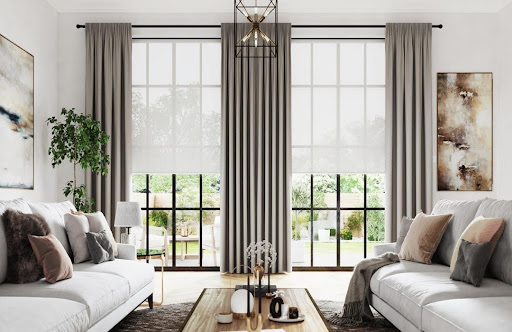
Green curtains have ceased to be a specialized product that is adopted by environmentally conscious homeowners. By 2026, they will be incorporated in daily interior choices, particularly in areas such as the UAE, where heat, sunlight, and energy consumption are issues of concern at all times. Therefore, the responsibility of the curtains has increased.
They obscure the light, control the temperature, control the mood, and, more importantly, mirror the values of the personality. The selection of environmentally friendly curtains is not a matter of perfection. It is concerned with making superior fabric choices that will not be regretted after only a day.
Why Sustainable Curtains Matter More Than Ever?
The curtains are just sitting in a room; however, they deal with light, air, and heat each and every day. Lack of proper selection of fabrics leads to fading of the fabric, heat retention, or the fabric has to be changed frequently. Sustainable curtains strive to shorten that cycle with material that is durable, breathable better and generates less waste.
In the UAE, with the sun rays and air conditioning prevailing in the indoor environment, the decision of the curtains has a direct influence on the comfort and energy consumption. Sustainable options are discussed increasingly more frequently due to the fact that they resolve real challenges and not due to the fact that they are in fashion.
1. What Does It Mean For Curtains To Be Sustainable?
Not all the curtains that are called eco-friendly do not act in the way on an everyday basis. Sustainability is not about the labels but the source of the fabric, its creation, and its upkeep.
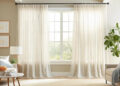
Natural fabrics, linen, cotton, and hemp, are at the forefront of the discussion. These materials are breathable as opposed to the synthetic ones and receive old age more gracefully. An example of such is the linen curtains, which do not degrade but soften as time goes by. They get wrinkles, yes, but quite a number of people have come to believe that it is an inherent part of their beauty and not a defect.
Polyester that has been recycled is also receiving some interest. Although also synthetic, it lowers the raw materials of plastic, and it is also applicable in blackout and thermal curtain models. The major distinction is the longevity. When the duration of a curtain increases, and the number of replacements required reduces, the effect decreases automatically.
2. Eco-Friendly Curtain Fabrics To Purchase in 2026
The way a curtain is sustainable is determined by the fabric choice. Some of the materials are penetrating ordinary households in 2026.
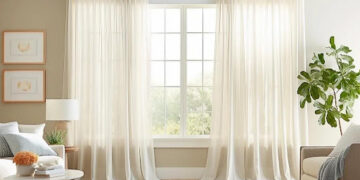
The organic cotton curtains are in demand as the fabric is easy to maintain and is familiar. They are great in the living rooms and bedrooms where comfort is desired. Linen curtains are still increasing in popularity, particularly in hot places. They permit the daylight to pass through the building, and the artificial lighting is not necessary as much.
The fabrics made of bamboo are also emerging frequently. They are made light and quickly grow, and are surprisingly strong when woven in a proper manner. They are effective in contemporary interiors, where less texture is favored.
In the case of blackout requirements, there are no options other than blended fabrics. Here, the concentration is made on low-toxicity finishes and overcoats which minimize the amount of chemicals employed, and yet they can block light.
3. Green Curtain Design Ideas That Actually Work in Real Homes
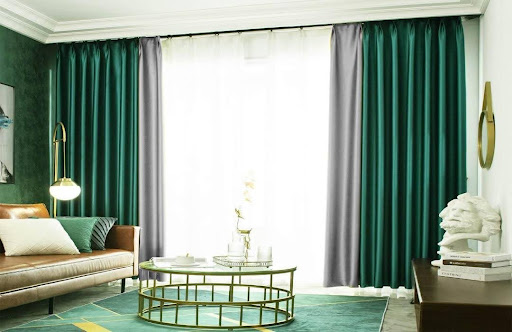
Sustainable curtains are not associated with making homes appear incomplete and too plain. Design still matters. The distinction between 2026 is subtle.
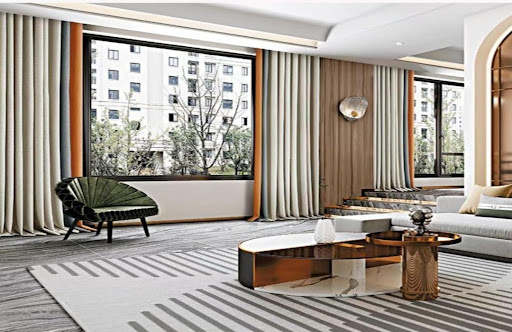
One of the strong approaches is layering. Light and sustainable fabrics can be used with deeper and heavier blackout curtains, which can be flexible. In the daytime, natural daylight penetrates. Privacy and darkness are regained at night. This minimizes the erosion of blackout layers and prolongs their existence.
Eco-friendly curtain design is dominated by neutral colors. Preferred colors are soft beige, off-white, stone grey, and muted greens, as they age well. Bright dyes are less stable and can be very harshly processed. Curtains remain topical, as well, in case the furniture or the color scheme on the walls alters with the use of calm tones.
Fit and length of the curtains also contribute. The ill-fitting curtains are dragged, stepped on or adjusted all the time. Efficient sizing minimizes the damage and replacement rate, which is an unobtrusive effort toward sustainability.
4. How Sustainable Curtains Help in Energy Efficiency?
Energy awareness is one of the reasons why sustainable curtains are being brought up more in 2026. In hot areas, curtains are used to keep windows and inside areas separated.
Eco curtains are lined with thermal features to minimize the amount of heat transferred during the peak sunshine periods. This reduces the strain on air conditioning. In the long run, it will result in a reduction of energy consumption and a stabilized interior temperature.
During colder seasons, heavier natural fabrics save on heating but do not air-tight the rooms. This equilibrium is more important than overall insulation. Homes should still breathe.
It is not aimed at cutting energy consumption altogether, but to make extremes softer. Naturally, the use of curtains, which assist in controlling temperature, minimizes the use of machines.
5. Misconceptions About Eco Curtains
The perception of sustainable curtains is still that they are fragile or difficult to clean. That is not always true. Such fabrics as linen, with the exception of synthetic ones, can withstand the practice of frequent washing. It is not so bad when slightly worn out.
Cost is also another misconception. Certain eco fabrics are expensive in the short term, but tend to be more durable. Replacement frequency is of concern. Purchasing and retaining curtains over a few years is often less expensive as compared to purchasing lower-priced curtains several times over.
Sustainability does not mean giving comfort. It is about selecting materials that are more in line with the way people live.
The Final Verdict
The sustainable curtains of 2026 will not be a matter of labeling but rather a matter of consideration. The behavior of fabrics, their durability, and comfort are more important than marketing terminologies. Curtains that facilitate control of light, balance of temperature, and long-term use are automatically eco-friendly.
The most environmentally friendly curtain is one that can be kept at home during so many years, operates silently every day, and does not require any attention. When that occurs, then it was most likely the correct decision.