

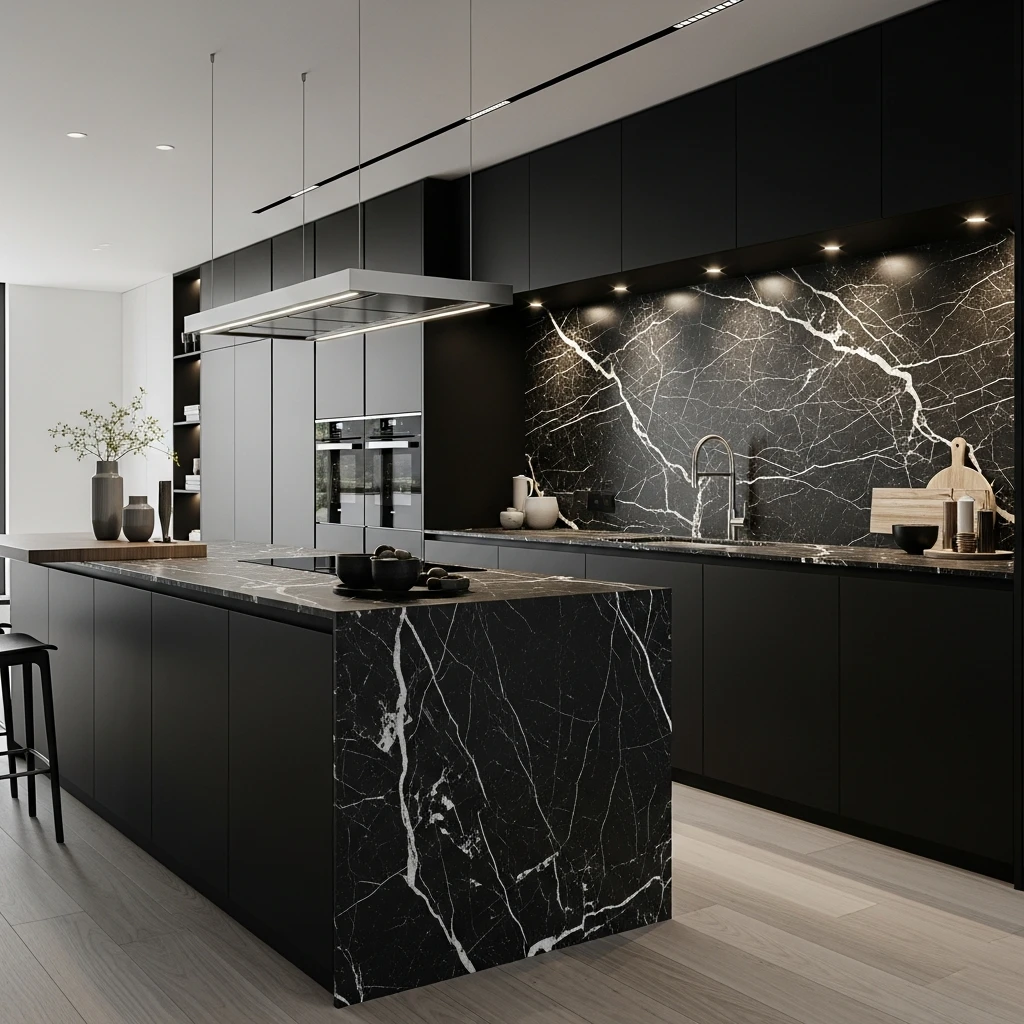
Black kitchens have a charm that feels instantly distinctive. They feel sleek and expressive, yet there’s a softness to them that makes the room feel calm and collected. It’s no wonder they’ve become such a popular choice for people who want a kitchen that feels both modern and meaningful.
However, as stunning as black can be, it’s also a colour that needs thoughtful handling. Without the right balance of light, texture, and complementary tones, the kitchen can feel flat, dark, or a little heavier than intended. So, if you’re planning to bring this look into your home, knowing what to balance and what to highlight can make all the difference.
Below are four clear, easy tips to help you design a black kitchen that feels beautifully stylish every single day.
1. Choose the Right Shade and Finish of Black
Choosing the right shade of black is the first and most important step in shaping the mood of your kitchen. You might think black is just black, but you’d be surprised by how many variations exist. Some feel warm and velvety, almost like charcoal blended with a hint of brown. Others lean cool and crisp, with undertones that resemble slate or deep midnight blue. Each one brings a different atmosphere into the room.
That’s why choosing wisely makes such a difference. If you want something gentle on the eyes, matte black has a calming quality because it absorbs light instead of reflecting it. A satin or soft-gloss finish, however, adds a touch of brightness while keeping the look modern and refined.


It’s a bit like choosing the fabric for your favourite coat. The texture shifts how it feels, how it catches light, and how it shapes your everyday experience.
2. Balance Darkness with Light and Contrast
Once you settle on a shade you love, it helps to consider how that colour will interact with everything around it. This matters because black kitchens naturally draw the eye and can feel dense without the right contrasts. When you add lighter counters, warm-toned fittings, or textured elements, the darker palette softens beautifully. The space starts feeling balanced, relaxed, and much easier to live with every day.
These contrasts can appear in different parts of the kitchen. For example:
- Soft cream or white stone countertops that brighten your prep space.
- Warm metals like brass for a soft highlight.
- Light or textured backsplashes to break up long stretches of darkness.
The nice part is that these variations are easy to explore today. Many kitchen brands, such as Magnet, offer a wide range of accessories, finishes, flooring options, and contrasting materials that pair beautifully with black kitchens. You can browse everything online, study high-quality photos, and compare tones without rushing.
Better yet, if coordinating all these details feels a little too much, many established brands now provide full design services. They can guide you through layout choices, help you pick the right accessories and finishes, and even assist with installation so your kitchen feels beautifully pulled together from the start.
3. Bring Warmth Through Texture and Natural Materials
Texture has a quiet way of warming up a darker kitchen. When you introduce materials that have their own natural grain or soft irregularities, they soften the boldness of black and make the space feel more inviting. Wood is one of the easiest ways to do this. Open shelves, wooden stools, or a timber island counter can add warmth that balances the richness of the cabinets.
Stone is another lovely pairing. Whether matte, honed, or lightly polished, it creates movement and depth, especially when placed next to smooth black surfaces. Even smaller elements, like metal handles or subtly patterned tiles, can add character without overwhelming the design.
You can also think about softer touches. A woven rug beneath the sink, ceramic dishes displayed on a shelf, or a linen runner on the island brings a gentle, lived-in feel to the room. These textures make the kitchen feel like a space you want to spend time in, not just admire from a distance. When the surfaces are dark, these warm details help everything feel balanced and comfortable.
4. Let Light Shape the Atmosphere
Light has one of the biggest influences on how a dark kitchen feels. Because black tends to absorb brightness, even a few well-planned lighting choices can change the entire energy of the room. A well-lit space feels softer on the eyes, clearer to move around in, and far more inviting during everyday use.
Here are a few ways to let lighting support the depth of a darker palette:
- Warm overhead lights to create a gentle, welcoming foundation.
- Under-cabinet lighting to brighten your prep areas and highlight texture on worktops and splashbacks.
- Pendant lights over an island for both function and a cosy visual focal point.
It also helps to keep windows as open as possible so natural daylight can spill into the room. When light touches the lighter surfaces you added earlier, the whole kitchen begins to feel more open and inviting.
To Wrap Up!
A black kitchen becomes a space you love when it blends depth, warmth, contrast, and thoughtful detail. The right choices in shade, texture, lighting, and materials help the room feel both modern and welcoming. Even trying a few of these tips can bring your design vision closer to life and help you create a kitchen you genuinely enjoy spending time in.