
As the chill winds sweep across the United Kingdom, preparing your home for the colder months is more than just stacking firewood; it is a crucial investment in comfort, energy efficiency, and protecting your property from the elements. A well-prepared home can significantly reduce heating bills and prevent costly damage caused by frost, damp, and burst pipes.
Here is a comprehensive guide to winter-proofing your home, offering practical steps you can take now to ensure a warm and worry-free season.
Insulate and Eliminate Draughts
Effective insulation is the backbone of a winter-proof home. Heat naturally moves from warmer to cooler areas, so poorly insulated walls, lofts, and floors are massive energy drains.
Check your loft insulation. The recommended depth for mineral wool insulation is 270mm, but if you have an older home, it might be significantly less. Topping up insulation is a relatively inexpensive job that can provide substantial long-term savings. Similarly, consider cavity wall insulation if your home was built between the 1920s and 1990s.


Stopping draughts is another quick win for energy efficiency. Common culprits include gaps around window and door frames, letterboxes, keyholes, and unused chimneys. Purchase inexpensive draught-proofing strips for external doors and windows. You can also use specialist fillers or sealant around gaps in skirting boards or floorboards. For older or single-glazed windows, consider temporary solutions like secondary double glazing kits. These inexpensive kits use a clear plastic film or acrylic sheets mounted inside the existing frame to create an insulating air pocket, effectively reducing heat loss and condensation without the cost of full double glazing replacement.
Service Your Heating System
Your boiler and central heating system are going to work harder than at any other time of the year. Ensuring they are in peak condition before the first deep freeze is essential.
Arrange for an annual service by a Gas Safe registered engineer. A service can identify small issues before they become expensive breakdowns and ensure your system is running as efficiently as possible, which saves on fuel bills.
Before turning the heating on fully, bleed your radiators. If a radiator is cold at the top, it means trapped air is preventing hot water from circulating properly. Using a radiator key, release the air until water starts to appear. This simple task ensures your radiators heat up fully and evenly. You should also check the pressure gauge on your boiler and top it up if it is too low, following the manufacturer’s instructions.
Protect Your Plumbing
Burst pipes are one of the most common and devastating issues homes face during winter. Water expands as it freezes, and the resulting pressure can cause pipes to rupture, leading to significant water damage when the thaw arrives.
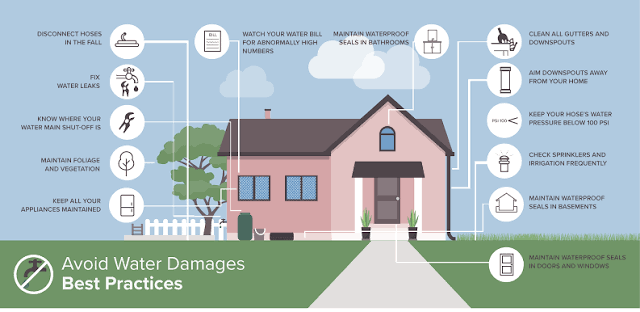
Focus on external and unheated areas. If you have an outdoor tap, disconnect any hoses and consider insulating the tap itself with a purpose-built insulating cover. Turn off the water supply to the outside tap from an internal valve and drain the pipe by opening the tap until all water has stopped running.
For pipes that run through cold areas like garages, lofts, or basements, use foam pipe lagging (insulation) to protect them from freezing. It is especially important to lag pipes near external walls. If you plan to be away from home during winter, leave your heating on a low setting (known as a frost setting, usually around $10^{\circ}\text{C}$ to $12^{\circ}\text{C}$) to keep the pipes warm enough to prevent freezing.
Clear Gutters and Check the Roof
Water is your home’s biggest enemy in winter. Blocked gutters and downpipes can cause rainwater to overflow and soak into your walls, leading to damp and potentially structural issues.
Before the heavy rains and snow arrive, get a ladder and clear out all leaves, moss, and debris from your gutters and downpipes. Ensure the water flows freely and correctly into the drain.
While you are up there, inspect your roof from the ground (or safely from a window) for any slipped, cracked, or missing tiles. A small gap can allow wind-driven rain and snow to enter the roof space, causing leaks. Repairing or replacing a few tiles is a minor expense compared to the cost of water damage.
Prepare the Garden and External Areas
Do not forget the perimeter of your property. Put away garden furniture, tools, and any equipment that could be damaged by frost or high winds.
If you have external paintwork on wooden window frames or doors that is peeling, touch it up or repaint it to prevent moisture getting into the wood and causing rot. Moisture ingress is amplified in freezing conditions. Finally, check any trees or large shrubs near your house and remove any dead or weak branches that could fall onto your roof or windows during a storm.
Taking these practical steps now will not only keep your home warm and cosy throughout the winter but will also provide peace of mind and help you avoid the stress and expense of an emergency repair during the coldest months.