

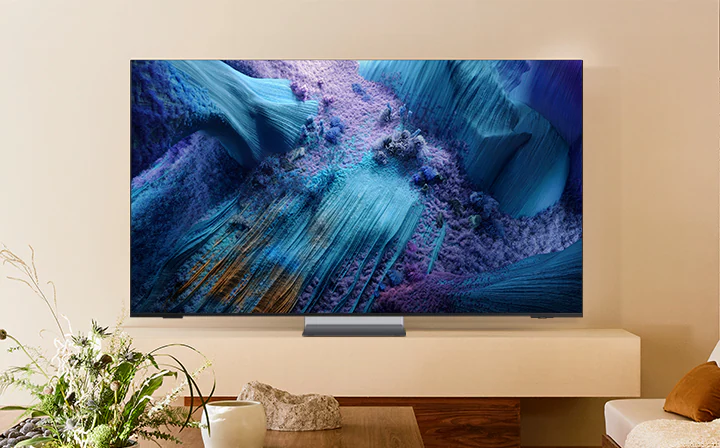
Television technology advances quickly, offering consumers many choices for their next home theater centerpiece. The decision between Mini-LED and QLED displays involves comparing two highly capable yet fundamentally different approaches to picture quality. By examining the core elements of each screen, we can clarify the best fit for your viewing habits, so let’s explore what truly matters in this comparison.
The ability to display deep, inky blacks next to brilliant whites is the hallmark of a high-quality display. Many consumers ask, is mini LED better than QLED for contrast, and the answer lies mostly in backlighting capability. Mini-LED technology’s extensive number of dimming zones helps with near-perfect black levels by essentially turning off light in small, localized areas. While QLED screens can achieve very dark blacks, they sometimes struggle to match the light precision of Mini-LED’s full array local dimming (FALD). The broader zones in a QLED FALD system can lead to slight light pollution or a hazy look in dark scenes.
Backlight Technology Difference
Mini-LED displays utilize thousands of tiny light-emitting diodes to provide illumination behind the liquid crystal panel. This significant increase in the number of light sources permits much finer control over specific zones of the screen, aiding in reducing light bloom. This localized dimming helps with darker blacks and allows for much more precise image rendering.
QLED, which stands for Quantum Dot Light-Emitting Diode, incorporates a layer of quantum dots to enhance color output. While QLED uses a quantum dot film for color, it often relies on a traditional, larger LED array for its backlighting. This setup may improve color purity and vibrancy, but does not inherently offer the same granular control over light and shadow.


Peak Brightness Levels
Mini-LED displays are built to deliver exceptional peak brightness, often surpassing standard QLED sets in overall light output capability. The high concentration of smaller, powerful LEDs allows manufacturers to push the screen’s luminance to very high levels safely. This aids in improving performance in brightly lit rooms and helps high dynamic range (HDR) content truly pop with dazzling highlights.
QLED screens are also very bright, especially due to the efficiency of the quantum dot layer in converting light. These dots convert the blue LED backlight into pure, saturated colors without much energy loss during the process. However, their light generation system is often limited by the size and number of traditional LEDs used in the backlight array.
Color Volume and Accuracy
Color volume refers to a television’s ability to maintain color saturation and fidelity across the entire range of brightness from dark to light. QLED technology is specifically designed around the quantum dot layer, which helps with achieving extremely wide color gamut coverage easily. QLED sets typically excel at delivering a very wide and well-saturated palette of hues.
Mini-LED screens also achieve excellent color volume and accuracy, though the quantum dot layer is still the primary driver for the color itself, not the tiny LEDs. The benefit of Mini-LED’s superior contrast enhances the perception of color depth and richness, especially in dark scenes. The overall picture quality is a harmonious blend of color purity and the underlying contrast ratio.
Screen Uniformity Factor
Uniformity concerns how evenly the backlight is distributed across the screen, especially when displaying a single, solid color, such as a gray test pattern. Mini-LED technology, with its dense array of light sources, can sometimes exhibit slight variations in light distribution from zone to zone. Quality in production greatly influences this factor, and premium Mini-LED sets usually minimize these issues efficiently.
QLED sets with fewer, larger LEDs in the backlight array may also struggle with uniformity, particularly in lower-end models. Poor uniformity can be distracting during specific scenes, such as live sports broadcasts with large green fields or dark, atmospheric movies. A thorough review of professional tests for any specific model aids in revealing potential uniformity weaknesses before purchase.
Motion Clarity and Speed
Motion clarity is essential for fast-paced content like sports or action movies, and it is largely governed by the panel’s refresh rate and response time. Both Mini-LED and QLED displays are often available with high refresh rates, like 120 Hz or higher, which helps to minimize motion blur artifacts. The speed at which the liquid crystals can transition between states, known as response time, also dictates how clear moving objects appear on screen.
The backlighting method itself does not directly affect the liquid crystal layer’s response time, which is a property of the panel. However, Mini-LED’s ability to flicker its backlight at high speed, known as Black Frame Insertion (BFI), may help improve perceived motion smoothness. This technique inserts a black image between frames to reset the visual image on the retina, though it can also slightly dim the overall picture.
Size and Design Profile
The physical thickness and overall design of a display are important considerations for modern interior aesthetics and integration into a space.
The following design factors are critical in the overall profile:
- The required need for effective heat management components.
- The type and overall density of the backlighting system.
- The inclusion of integrated sound bars or speaker arrays.
- The overall size and design of the bezel around the screen.
Price and Value Assess
Generally, Mini-LED technology is considered a premium feature due to the complexity and cost of implementing thousands of individual light sources. This typically places Mini-LED models in the higher price brackets compared to similar-sized QLED models from the same manufacturing generation. Buyers must weigh the benefits of superior contrast against the higher retail price tag.
QLED technology, being a more established concept, offers a much wider range of options across different budget tiers, providing great performance for the cost. Many mid-range QLEDs offer excellent color and brightness without the substantial price hike associated with the most sophisticated dimming systems.
Deciding which technology to purchase requires a clear understanding of your priorities and viewing environment, especially when trying to answer the question, is mini led better than qled. Ultimately, the best choice is the screen that offers the picture quality features most important to you, making an informed decision easy and straightforward.